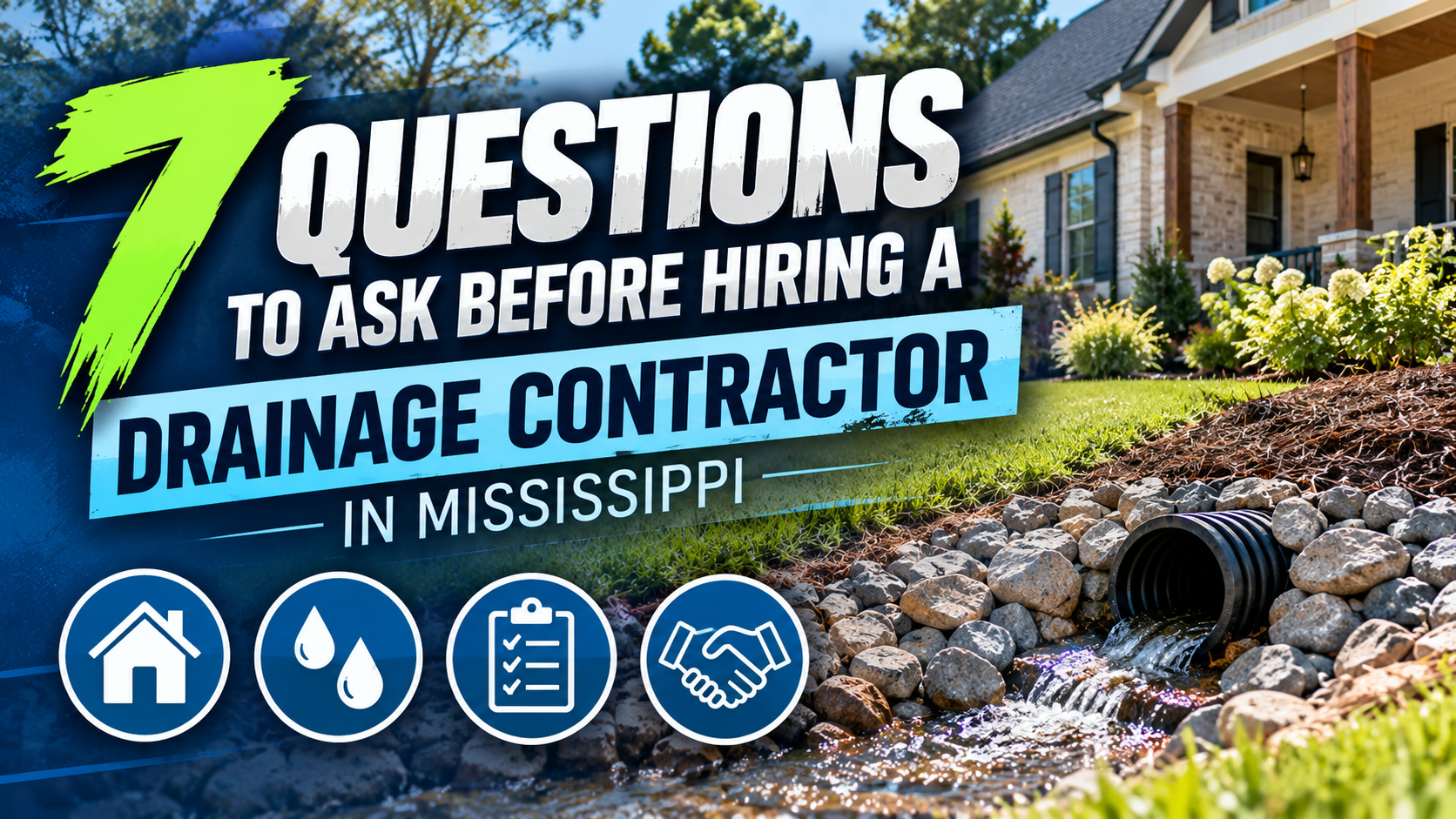
Standing water after a storm, a soggy lawn, or runoff flowing toward the house can make drainage work feel urgent. But different water problems call for different solutions. Before you hire a contractor in Mississippi, take time to understand the issue and ask questions that make competing proposals easier to compare.
1. What is causing the water problem?
Ask the contractor to explain where the water comes from, how it moves across the property, and where it can safely go. A low spot that collects rainwater is different from roof runoff discharging beside the foundation or water flowing in from an uphill property. The proposed work should address the source, not just the most visible puddle.
- Where does the water enter the problem area?
- Does the issue occur only during heavy rain or after ordinary showers?
- What evidence supports the proposed diagnosis?
2. Which solution do you recommend, and why?
Drainage projects can involve regrading, downspout extensions, surface drains, swales, catch basins, or underground piping. A French drain may help in some situations, but it is not a universal answer. Ask why the suggested approach fits your soil, slope, available space, and the type of water involved.
- What other options did you consider?
- Will the project affect patios, walkways, plant beds, or irrigation lines?
- What maintenance will the finished system require?
3. Where will the collected water discharge?
Moving water away from one part of a yard is only half the job. Ask to see the proposed discharge point and understand whether the route crosses neighboring property, sidewalks, or other sensitive areas. Rules about stormwater discharge, grading, and work near public rights-of-way vary by location. The contractor should identify any local approvals or restrictions that need checking before work begins.
4. How will you protect the house and existing landscaping?
Drainage improvements can require excavation and equipment access. Ask how the crew will locate utilities, protect the foundation, avoid damaging tree roots where possible, and handle existing irrigation or landscape lighting. In the United States, calling 811 before digging is an important step for locating participating underground utilities; private lines may require separate locating.
- Which areas will be excavated or disturbed?
- Who is responsible for utility locating and any private lines?
- Will soil, sod, mulch, and planting beds be restored?
5. What exactly is included in the written estimate?
Two bids can look similar while covering different work. Request an estimate that identifies the drainage method, approximate route and dimensions, materials, discharge location, site restoration, and any exclusions. Ask how unexpected buried obstacles, additional excavation, or changes in scope will be priced.
- Are permits, hauling, and cleanup included?
- What materials and pipe sizes are specified?
- How are changes approved before extra charges are incurred?
6. What experience and documentation can you provide?
Ask for examples of drainage projects with conditions similar to yours, not just general landscaping photos. Find out who will supervise the job and who will perform the excavation. Depending on the work and jurisdiction, licensing or other requirements may apply. Ask for applicable credentials and insurance documentation, and verify them with the relevant authority rather than relying on a verbal assurance.
7. How will we know the project is finished correctly?
Discuss the final grading, cleanup, and any walkthrough before work starts. Ask what the contractor can reasonably demonstrate at completion and what may only become clear during a significant rainfall. No contractor can promise that a property will never have standing water under every storm condition. A good proposal should instead explain the intended performance, limitations, and steps to take if concerns arise.
A simple checklist before you decide
Take photos during and after rain, note where water collects, and gather two or three estimates based on the same problem description. Compare the diagnosis, drainage route, restoration work, communication, and total scope—not price alone. Keep the final agreement and any changes in writing.
- Document the problem with photos and dates.
- Ask each contractor the same seven questions.
- Review the discharge plan and restoration details.
- Verify applicable credentials and agree on the scope in writing.
Find a local professional for your project
When you are ready to compare providers, browse Mississippi service businesses through Mississippi LocalPros at https://mslocalpros.com/. Use the directory as a starting point, then ask each provider about relevant drainage experience, availability, and the specific work your property needs.